

Table of Contents
- Start With the Right Sarong: Fabric, Size, and Drape
- How to Wear a Sarong as a Dress for Dinner
- Sarong Skirt and Layering Options for Evening
- Best Accessories for Sarong Outfits After Dark
- Sarong Styling Tips for Evening Wear: Footwear, Body Type, and Fabric Care
- Beach to Dinner: Transitioning Your Sarong Look
- Common Sarong Styling Mistakes to Avoid
- Frequently Asked Questions
Last Updated: September 16, 2026
Start With the Right Sarong: Fabric, Size, and Drape
A sarong for dinner starts with the fabric, not the knot. What separates a beach wrap from one that works at a candlelit table is material, dimensions, and drape.
How to Wear a Sarong as a Dress for Dinner
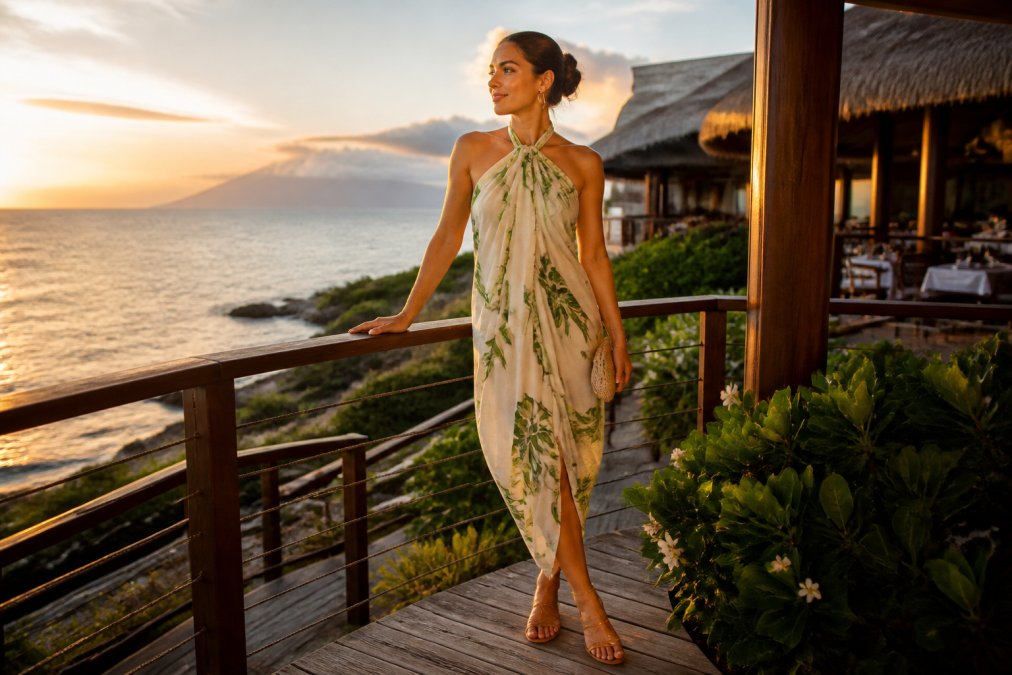
Learning how to wear a sarong as a dress for dinner comes down to one principle: anchor the fabric high and tight, then let the excess fall. The knot holds the shape; the drape does the styling.
The Mini Dress Wrap
The mini dress wrap is the fastest dinner-ready style: hold the sarong behind your back at chest height, bring both top corners forward over your shoulders, and knot them at the nape of your neck. Cinch the waist with a belt or a second side knot, and keep the hem mid-thigh to just above the knee.
The Halter Neck Style
The halter neck style starts the same way but skips the waist cinch. Cross the top corners behind your neck, let the fabric fall straight, and tie a thin scarf or ribbon at your smallest point. The column-like drape reads more formal than the mini wrap.
The Twisted Front Knot
The twisted front knot separates a beach cover-up from resort wear. Hold the sarong in front of you at chest level, twist the center of the top edge two or three times into a rope, then wrap it around your neck and tie. The twist creates a gathered, Grecian effect across the bodice, tighter for more coverage, looser for a deeper neckline.
Sarong Skirt and Layering Options for Evening
Skirt styling is where a sarong earns its place in a vacation wardrobe, because it works with pieces you already packed. Two approaches cover most evenings: the kimono drape for warm nights, and layering over trousers for cooler looks.
The Kimono Drape
The kimono drape turns the sarong into an open layer rather than a wrap. Hold the fabric behind your shoulders like a shawl, let it fall open at the front, and tie the front corners loosely at your waist or let them hang. Over a slip dress or tank-and-skirt, it adds texture without hiding your outfit, the most forgiving style if you prefer not to define the waist.
Layering Over Jeans or Trousers
Layering over jeans or trousers makes a sarong work for a city break or cool evening. Fold it into a wide rectangle, drape it over one shoulder, and pin or knot it at the opposite hip as an asymmetric overlay. The fabric softens the line of denim or tailored trousers and makes the outfit look intentional.
| Look | How to Tie It | Best For |
|---|---|---|
| Mini dress wrap | Knot at nape, cinch waist | Casual dinners, beach bars |
| Halter neck style | Cross behind neck, tie waist | Formal restaurants |
| Twisted front knot | Twist center, wrap neck | Statement evening looks |
| Kimono drape | Shawl over shoulders, loose front | Warm nights, layered outfits |
| Over trousers | Asymmetric shoulder drape | City breaks, cooler evenings |
Best Accessories for Sarong Outfits After Dark
The best accessories for sarong outfits do two jobs: hold the drape in place and shift the look from beach to evening. Choose pieces that add structure, because a sarong is soft by nature and needs something crisp to balance it. Think in swaps, not additions.
The Beach-to-Bar Swap List
Most people over-accessorize by adding evening pieces on top of beach pieces. Swap instead:
- Sun hat → statement earring. A wide-brim hat reads daytime no matter how you tie the wrap. Trade it for a single sculptural earring, a gold hoop at least 1.5 inches across, or a drop that grazes the collarbone. One bold earring does more than a full jewelry stack.
- Canvas tote → structured clutch. A soft tote collapses the silhouette. A hard-shell or boxy clutch in leather or a woven straw with a rigid frame gives the eye a crisp edge to sit against the soft fabric.
- Flip-flops → heeled sandal or pointed flat. Covered in the footwear section below, but the accessory logic is the same: the shoe is the formality dial.
- Beach cover-up jewelry (shells, puka, cord) → metal with a finish. Swap raw or matte beach textures for polished gold, silver, or brass. A polished finish catches candlelight; a matte cord absorbs it.
Belts: Width Changes the Look
A belt is the most useful sarong accessory because it converts a soft wrap into a defined silhouette. Width matters more than color:
- Slim belt (under 1 inch): Best over the twisted front knot and the halter style, where you want to suggest a waist without cutting the drape. A thin leather or woven belt in a tone close to the sarong keeps the line long.
- Wide belt (2 inches or more): Best over the kimono drape and over-trousers layering, where you need to hold a larger volume of fabric. A wide belt over a kimono drape turns an open layer into a defined coat-like shape.
- Avoid: Elastic or stretch belts. They grip the fabric and create a visible ridge under restaurant lighting.
Jewelry by Neckline
The neckline your knot creates should decide your jewelry, not the other way around:
- Halter and twisted necklines: The fabric already gathers at the neck, so keep the neckline clear. A fine chain (1-2 mm) or a single short pendant sits well; a chunky pendant fights the gathered fabric and adds visual weight where the drape is already busy.
- Kimono drape and over-trousers: The neckline is open, so this is where a longer chain or a layered set works. A 24-30 inch chain falls into the open V of a kimono drape and fills the space without competing.
- Brooches: A brooch is the most underused sarong accessory. Pin one at the shoulder of a kimono drape to hold the fabric in place and add a polished detail at the same time, it solves a styling problem and decorates. Choose a brooch with a secure clasp; a loose pin will not survive a dinner service.
Metal and Finish
Match metal to the fabric, not to a rule. Warm-toned sarongs (terracotta, ochre, olive) sit well with gold and brass; cool-toned ones (navy, slate, white) with silver and pewter. If you mix metals, keep finishes consistent, all polished or all brushed, so the look reads intentional.
Sarong Styling Tips for Evening Wear: Footwear, Body Type, and Fabric Care
Sarong styling tips for evening wear come down to three decisions most guides skip: footwear, how the wrap suits your frame, and keeping the fabric crisp after a day at the beach. Get these right and the same wrap works for a dinner date and a resort dinner.
Footwear Pairing Guide
Footwear sets the formality of a sarong outfit faster than any other choice. Flat leather sandals keep a mini dress wrap casual; block heels or wedges lift a halter style into dinner territory; strappy heeled sandals pair best with the twisted front knot and kimono drape; a pointed flat or low heel keeps the line clean over trousers. Avoid flip-flops after dark.
Body-Type Specific Styling
Body-type specific styling is about where you place the knot and the volume, not about hiding anything. Tall or curvy: a longer wrap tied at the natural waist creates a flattering column without gapping. Petite: keep the hem above the knee and knot higher to lengthen the leg line.
Fabric Care and Wrinkle Prevention
Fabric care and wrinkle prevention start before you leave the hotel. Roll, don't fold, your sarong, folding creates hard creases that show under restaurant lighting. A quick steam in the bathroom while you shower relaxes most natural-fiber creases. Wash cold and hang to dry, and avoid hot dryers, which shrink and stiffen bamboo-cotton blends.
Beach to Dinner: Transitioning Your Sarong Look
Transitioning from beach to dinner takes about five minutes if you plan the swap. The goal is to change the styling, not the garment: re-tie the wrap into a dress or skirt style, then add the accessories that signal evening. Follow the sequence below in order, or you'll re-tie twice.
The Five-Minute Sequence
- Shake and dry first. Sand and salt stiffen the fabric and make every knot sag. Shake the wrap out fully and let it dry before you touch it. A damp sarong will not hold a twist.
- Re-tie into the evening style. Move from a beach skirt or cover-up into the mini dress wrap, the halter, or the twisted front knot. Anchor the knot high and tight; the drape does the rest.
- Add the waist definition. A slim belt or a second side knot converts a shapeless wrap into a silhouette. This is the single step most people skip.
- Swap the accessories. Sun hat off, statement earring on. Tote off, clutch on. Beach jewelry off, polished metal on.
- Change the shoes. This is the last step because it is the most decisive. Flip-flops undo everything above them.
Using a Sarong as a Scarf
Using a sarong as a scarf is the fastest transition trick. Fold the wrap into a long band, loop it around your neck, and let the ends hang. Over a simple dress or tank, it adds color and texture, covers shoulders for air-conditioned restaurants, and doubles as a wrap if the evening turns cool, all the work of a pashmina without another item in your bag.
Two variations worth knowing:
- The single loop: Fold into a band, loop once, let both ends fall in front. This reads casual and works over a tank or slip dress.
- The shoulder throw: Fold into a wide rectangle and drape over both shoulders like a shawl, letting the ends hang open. This reads more formal and covers the upper arms for a dressier restaurant.
What to Keep in Your Bag
The transition is faster if you pack the swap items together. A small evening kit, one structured clutch, one pair of heeled sandals or pointed flats, one statement earring, one slim belt, turns any beach look into a dinner look without a return to the room. Keep it in a single pouch so you're not digging through a beach bag at sunset.
What to Leave Behind
- Wet swimwear under the wrap. It will soak through and the fabric will cling. Change first.
- Beach bags and hats. They pull the whole outfit back toward daytime no matter how well the wrap is tied.
- Sunscreen residue on the fabric. It stains and stiffens. Let it absorb before you re-tie.
Common Sarong Styling Mistakes to Avoid
The mistakes that ruin a sarong outfit are predictable, and each has a simple fix.
- Knotting too low. A knot at the hip or below drags the whole silhouette down. Anchor high and let the fabric fall.
- Skipping the waist. Without a belt or a second knot, a dress-style wrap can look shapeless. Define at least one point.
- Mixing too many prints. Let the sarong carry the pattern and keep everything else solid.
- Wearing beach shoes. Footwear decides formality. Swap the flip-flops for a heel or a clean flat.
- Ignoring the fabric. A stiff or wrinkled wrap won't drape. Choose breathable, soft fabric and care for it properly.
Frequently Asked Questions
Are sarongs appropriate for dinner attire?
Yes, when styled intentionally. A sarong in a refined fabric like bamboo-cotton reads as a deliberate evening piece rather than beachwear. Tie it as a halter dress or mini wrap, add metallic jewelry, and pair with heeled sandals. The key is the knotting technique and accessories: a polished silhouette signals dinner, while a loose beach wrap signals poolside. Choose deeper colors or textured fabrics for after-dark settings.
How do you tie a sarong so it stays secure for dinner?
Double-knot at the hip or behind the neck, then tuck the loose ends under the wrap band. For a halter dress, cross the fabric behind your neck and tie a firm double knot at the nape. For a skirt wrap, fold the top edge down once before knotting to create friction that holds. Bamboo-cotton blends grip better than slippery synthetics, so the knot stays put through a full dinner.
What accessories elevate a sarong for an evening look?
Statement earrings, a thin metallic belt at the waist, and strappy heeled sandals transform a sarong from beach to dinner. A clutch and a delicate anklet add polish. For cooler evenings, drape a lightweight shawl or wear the sarong as a scarf over a slip dress. Keep jewelry minimal but intentional: one bold piece plus small accents works better than layering everything at once.
Can a sarong be worn as a formal dress?
A sarong works for smart-casual and resort-formal dinners, not black-tie events. To push it toward formal, choose a longer wrap in a deep solid color, tie it as a floor-length halter or one-shoulder dress, and add heels, a structured clutch, and fine jewelry. The fabric matters: a soft bamboo-cotton blend drapes elegantly, while stiff or sheer fabrics look casual. Keep the knot clean and the hem even.